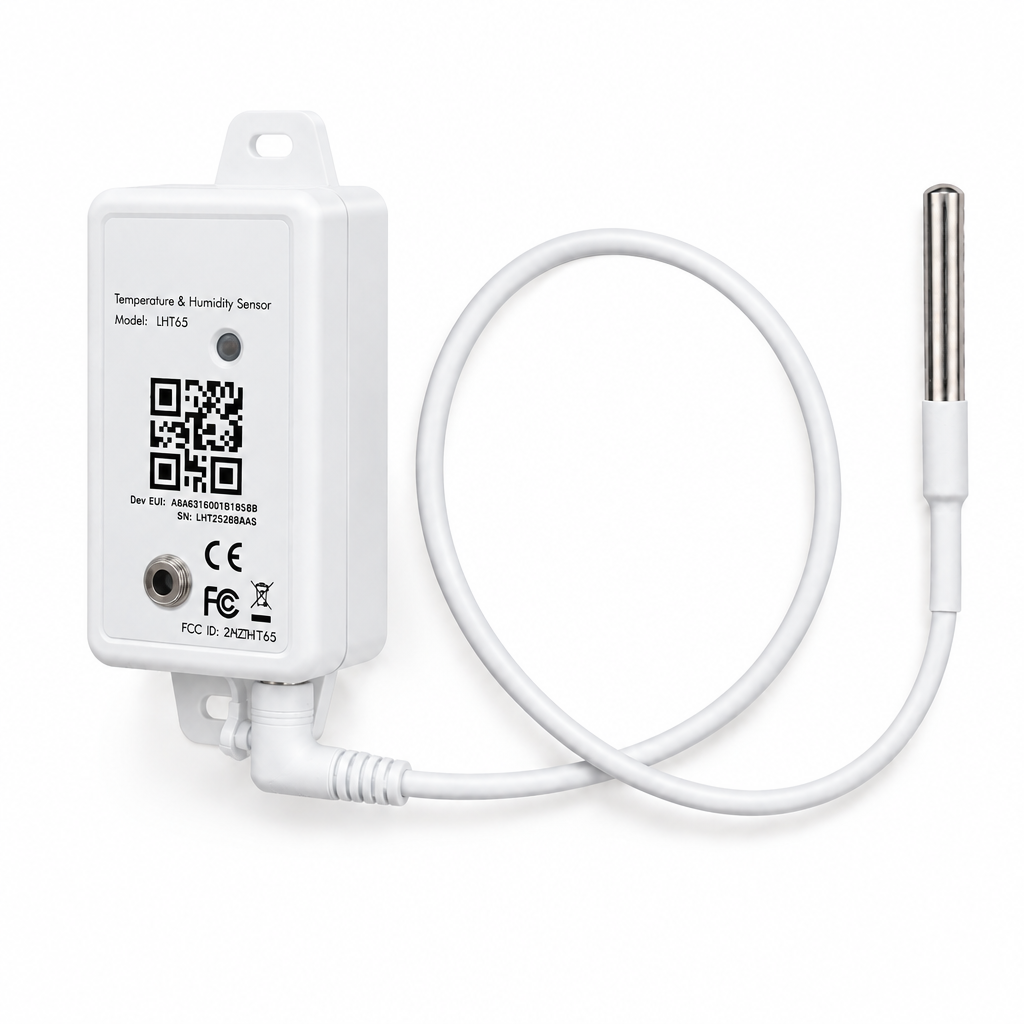
Senso puts a wireless sensor in every chiller, freezer and store room, logs the temperature every 15 minutes, and emails you the moment something drifts out of range. The compliance log writes itself.
One site visit. Battery-powered sensors go inside each unit; one small gateway plugs into a socket and joins your existing Wi-Fi or ethernet. No cabling to the fridges.
Temperature and humidity for every unit, kept for two years, timestamped by the sensor, not by a person.
An email the moment a unit leaves its safe range, after a grace period you set. It says which unit, how far out, and for how long.
Pick a unit and a month, and a signed compliance report comes out as a PDF: every reading, every breach, who acknowledged it. Print it or email it to the inspector while they are still standing there.
Someone walks to every unit, reads the dial, and fills in a sheet, several times a day, every day. That is paid time spent on paperwork instead of the actual work.
Someone takes something out and does not push the door shut. The unit warms for hours and nobody notices until what is inside is already spoiled.
A compressor stops at 1:40 in the morning. By the time the first person arrives, everything inside has been warm for hours and goes in the bin, along with the money spent on it.
MOPH and Baladiya inspectors can suspend a licence over missing or unreliable temperature records. A closure notice on the door costs more than anything inside the fridge.
96 readings a day per unit, whether or not anyone is on shift.
Which unit, how far out, for how long. Sent to the people you choose, after a grace period you set.
A signed PDF per unit per month, laid out the way an inspector expects to read it.
Sensors run on a multi-year battery and talk to one gateway by long-range radio. The gateway only needs your existing Wi-Fi or an ethernet port; our technician connects it.
Walk-ins, reach-ins, bar fridges and the dry store. A HACCP log without the clipboard.
Vaccine and insulin fridges held at 2–8°C, with the 15-minute record MOPH asks to see.
Reagent fridges, −20 and −80 freezers, and the humidity in the room they sit in.
Warehouses and distribution rooms where one sensor per zone replaces a person walking the floor.
If a sensor stops reporting, someone from Senso comes to your site and fixes it. That is the whole difference.
Every site is different: how many units, how far apart they are, where the gateway can sit. We count them on a short visit and send you one written quote: a one-time fee for installation and a monthly fee for the service.
The sensors are sealed, battery-powered units rated for several years of use, including inside freezers. Senso watches each battery level and schedules a visit to swap the sensor before it runs out, so your log never has a gap.
Yes. EU868 radio is chosen for exactly this; it passes through insulated doors and kitchen walls where Wi-Fi and Bluetooth do not. The technician confirms every sensor is reporting before leaving.
The report shows every reading with its timestamp, every breach, and who acknowledged it, then is signed by your manager. It contains everything a paper log does, and none of the gaps.
About an hour for a typical restaurant kitchen, and we work around service. Nothing is drilled and no unit is switched off.
The service is month to month, with 30 days notice to stop. Installation is a one-time fee paid at the start.

We walk your site, count the units, and tell you the exact monthly price before anything is installed.